+233 303944030

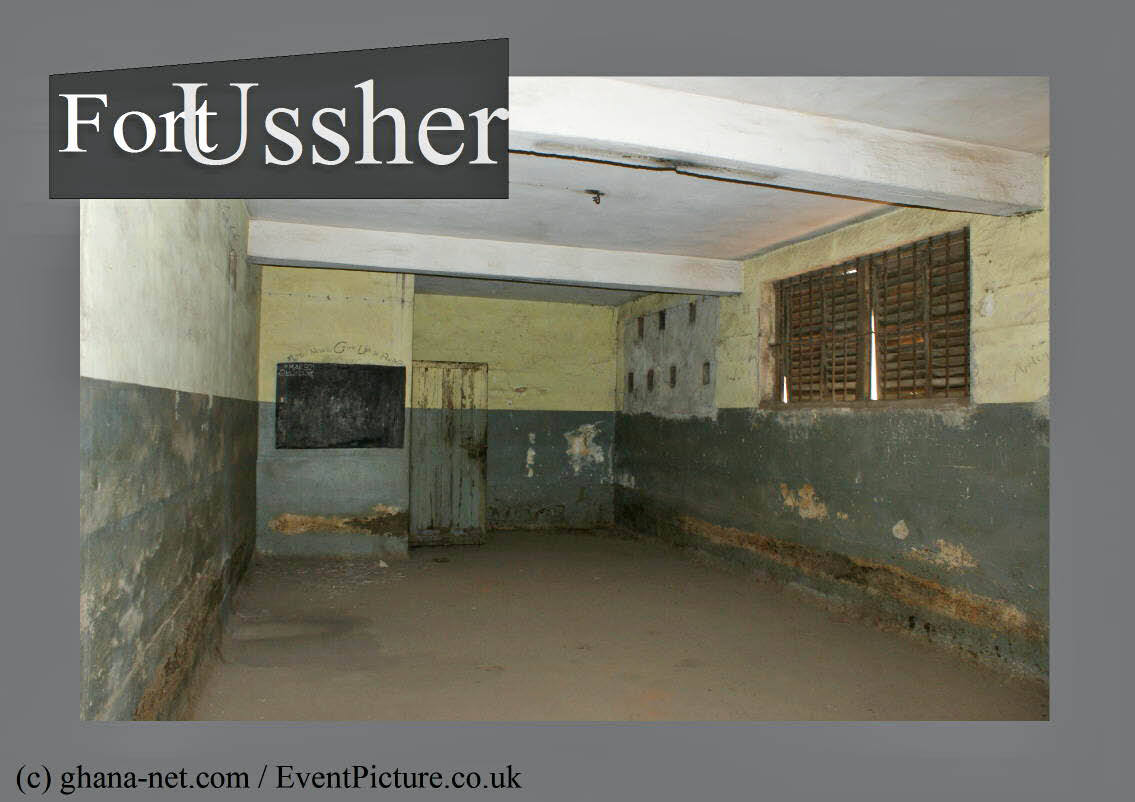
The cell where Kwame Nkrumah was held is here, complete with a small, basic toilet. See the photo below for a glimpse.
Additionally, a search below reveals results from over 40 related websites!

Kwame Nkrumah’s Imprisonment at Ussher Fort: The Prison That Forged a Leader

Listen to the audio or read along: THE ARREST OF A REVOLUTIONARY In January 1950, the Gold Coast—


The Arrest of a Revolutionary

In January 1950, the Gold Coast (now Ghana) was a nation on the edge of political transformation. Under British colonial rule, growing nationalist movements demanded immediate self-governance.
At the center of this struggle was Dr. Kwame Nkrumah, General Secretary of the United Gold Coast Convention (UGCC) and later founder of the Convention People’s Party (CPP).

After leading a campaign of civil disobedience called “Positive Action”—a movement involving strikes, boycotts, and protests against colonial rule—Nkrumah and several CPP leaders were arrested by the British colonial government on 22 January 1950.
He was sentenced to prison for incitement and sedition, beginning one of the most transformative episodes in Ghana’s journey to independence.

Kwame Nkrumah is released
from Ussher jail

During his 1950-1951 detention, he was sentenced to three years but was released after just over a year when his Convention People's Party (CPP) won the 1951 general election, allowing him to lead the new government.

Ussher Fort: From Slave Post to Political Prison

Built by the Dutch in 1649 as Fort Crèvecœur, Ussher Fort had originally served as a trading post and slave fort. When the British took control in the 19th century, they repurposed it as a colonial prison.

By the mid-20th century, Ussher Fort had become notorious for housing political prisoners, including nationalists like Kwame Nkrumah.
According to several historical and academic accounts, Nkrumah spent time imprisoned at Ussher Fort during the 1950–1951 period, alongside other activists and local freedom fighters.

The fort’s cells—were designed to break the spirit. Yet for Nkrumah, it became a school of resistance. Letters smuggled from his cell guided the CPP and maintained the party’s operations across the country.

Kwame Nkrumah was here, this is the cell. There is also a small simple toilet

Kwame Nkrumah was here, this is the cell. There is also a small simple toilet (c) Remo Kurka photography

Leadership Behind Bars

Even in confinement, Nkrumah’s influence only grew stronger. His imprisonment turned him into a symbol of resistance and moral courage.
Across the Gold Coast, his name became synonymous with freedom. CPP members continued their political campaign, spreading the rallying cry of “Self-government now!”

When the first general elections for the Legislative Assembly were held in February 1951, Nkrumah—still imprisoned—ran for the Accra Central seat.
The result was historic: he won by an overwhelming margin.

The colonial authorities, realizing the impossibility of maintaining control without him, ordered his release from prison on 12 February 1951.
Within days, Kwame Nkrumah walked free from Ussher Fort to become Leader of Government Business, and soon after, the first Prime Minister of the Gold Coast.


The Fort’s Enduring Symbolism

Today, Ussher Fort stands as one of Accra’s most important historical monuments. Its walls witnessed both the atrocities of the slave trade and the struggles of colonial-era political prisoners.

The fort is now part of Ghana’s national heritage and a UNESCO-recognized conservation site. It serves as a museum of memory, connecting the centuries-long fight for freedom—from the enslaved Africans of the 17th century to the independence leaders of the 20th.

Nkrumah’s time at Ussher Fort remains a defining moment in Ghanaian history.
It was not only a punishment—it was the crucible that shaped a visionary, proving that even from within prison walls, leadership could ignite a revolution.


Legacy of Nkrumah’s Imprisonment

  • His arrest turned him into the most recognized face of African nationalism.

  • His electoral victory from prison demonstrated the power of popular support.

  • His release marked the irreversible decline of British colonial authority in West Africa.

  • Ussher Fort remains a symbol of how oppression can birth liberation.

 Key Facts

  • Nkrumah was arrested on 22 January 1950 for leading the “Positive Action” campaign.

  • He was detained at James Fort Prison in Accra, first.

  • The term of his imprisonment is often given as approximately 14 months. Until Feb 12, 1951.

  • Kwame Nkrumah had is own private call at Ussher Fort, thereafter!